Striping
Parking Lot Striping in Phoenix
Prefer to talk? Call (480) 533-5377
Request a free estimate
Tell us about your property. We take it from there.
What it is
What parking lot striping in Phoenix includes
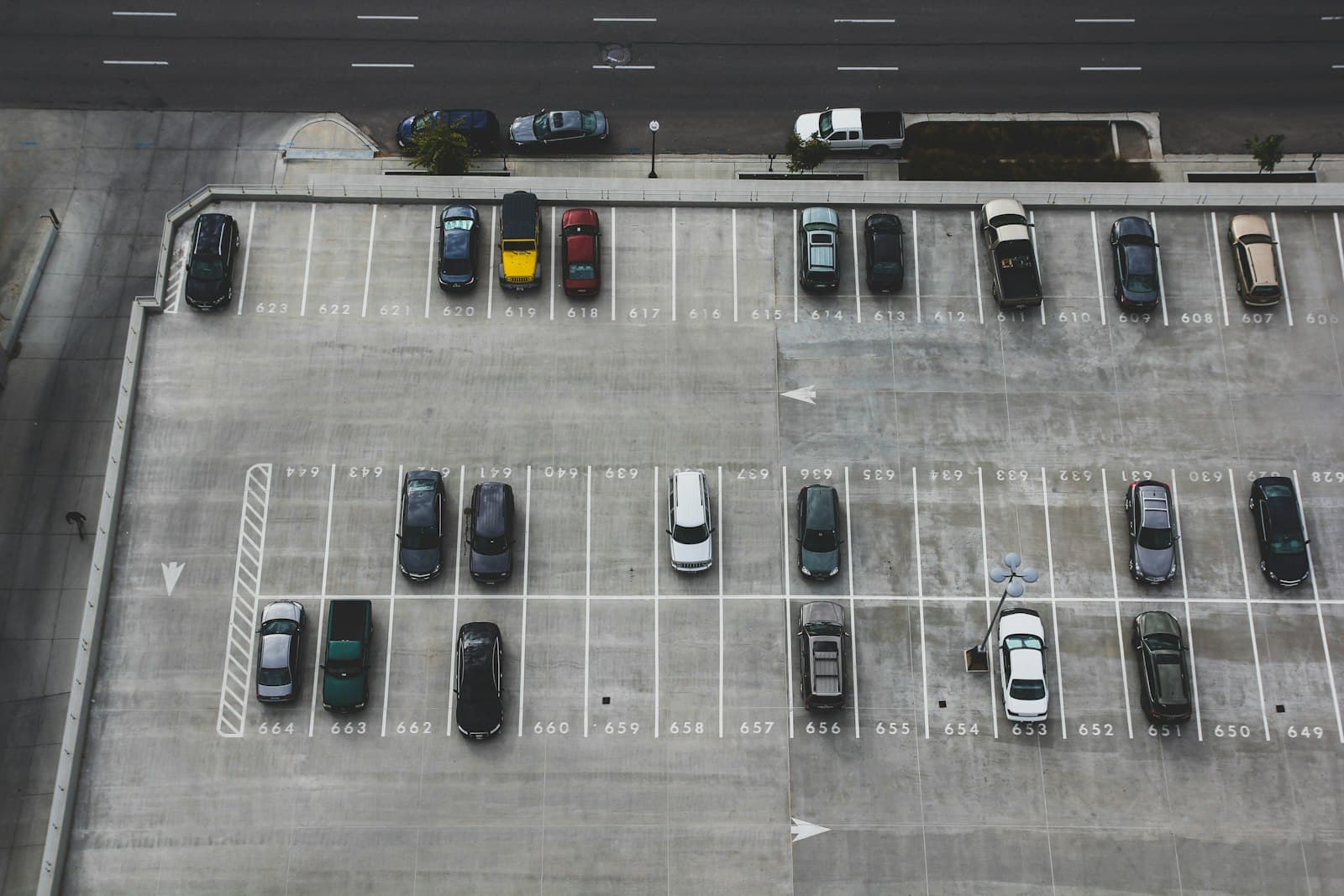
Parking lot striping is the layout and painting of the lines and symbols that organize a lot: stall lines, drive-lane arrows, crosswalks, stop bars, accessible stalls and access aisles, fire lanes, curb paint and the markings that support signage.
Restriping repaints an existing layout. A new layout starts from measurements and a stall plan, and is the right choice after paving, after sealcoating, or when a lot's circulation or stall count needs to change.
Done well, striping does more than look clean. It controls traffic flow, protects accessible routes and supports fire lane requirements.
When you need it
When your lot needs restriping
Faded lines are an obvious sign, but they are not the only one.
- 01
Lines are hard to read
When drivers cannot tell where stalls begin and end, parking gets sloppy, aisles clog and tenants and customers notice.
- 02
You just sealcoated or paved
Sealer covers old lines and new asphalt has none. Striping is the final step that makes the lot usable again.
- 03
Accessible stalls have faded
Faded symbols, missing access aisles or worn signage supports are a compliance and liability risk.
- 04
Fire lanes need refreshing
Fire lane curbs and markings have to stay visible to be enforceable.
- 05
The layout is changing
New tenants, added stalls, loading zones, EV spaces or a changed traffic pattern all call for a new layout, not just a repaint.
Process
Our parking lot striping process
- 01
Layout review
We review your existing layout, measure the lot and confirm what is changing: stall count, accessible stalls, fire lanes and markings.
- 02
Surface prep
The surface is swept and cleaned so paint bonds. Existing lines serve as reference points, or are removed where the layout is changing.
- 03
Layout and painting
Lines are laid out to the plan and painted with commercial traffic paint. Stencils are used for accessible symbols, arrows and lettering.
- 04
Cure and reopen
We barricade freshly painted areas and coordinate so tenants and customers can use the lot again as soon as the paint allows.
Phoenix factors
Striping in Phoenix heat and sun
Sun fades paint
Intense UV and sun-baked asphalt wear traffic paint faster than most climates, especially in high-traffic lanes and entrances.
Heat, wind and application
Paint dries quickly in Phoenix heat, but surface temperature and wind still affect how it is applied. We schedule with that in mind.
Working around business hours
Retail and office lots are often striped at night or on weekends so customers keep access. We plan the window with you.
Monsoon timing
Paint needs a clean, dry surface. During monsoon season we work around the forecast rather than painting into a storm.
ADA parking striping and fire lane markings
Accessible stalls need the right count, correct dimensions, an access aisle, the accessible symbol and a signed route. Fire lanes follow the local fire code and your property's approved plan. Re-striping is the moment these details are fixed, or accidentally broken.
We mark accessible stalls, access aisles and fire lanes to the layout and requirements for your property. For questions about how many accessible stalls a lot needs or where they must go, your approved plans and a qualified accessibility consultant govern, and our guide explains the common requirements in plain language.
Cost
What affects parking lot striping cost
Striping is priced by the work involved, not by a flat rate. These are the factors that change the number.
- Lot size and stall count
- The number of stalls and the total length of line to paint.
- Restripe or new layout
- Repainting an existing layout is simpler than laying out a new one from measurements.
- Line removal
- Removing old lines where the layout is changing adds work.
- Accessible stalls, arrows and curbs
- Stenciled symbols, directional arrows, crosswalks and curb or fire lane painting.
- Surface prep
- Sweeping, cleaning and oil or debris removal so paint bonds properly.
- Access and schedule
- Night or weekend work and phased sections to keep parking available.
- Bundling with other work
- Striping as part of a sealcoat or paving job is more efficient than a separate visit.
FAQ
Parking Lot Striping FAQs
How often should a commercial parking lot be restriped?
It depends on traffic, sun exposure and the paint used. High-traffic retail lots usually need it more often than low-traffic office or HOA lots. If stall lines are hard to read or accessible stalls have faded, it is time.
Should I stripe right after sealcoating?
Yes. Sealer covers the old lines, so striping is the final step. We sequence it so the sealer has cured before paint goes down.
Will striping close my parking lot?
We plan the work in sections or after hours so parking stays available where possible. The estimate describes the sequence and closure windows.
Do you stripe accessible stalls to code?
We mark accessible stalls, access aisles and symbols to the layout and requirements for your property. For questions about count and location, your approved plans and a qualified accessibility consultant govern.
Can you change my stall layout or add stalls?
Yes, where the pavement dimensions allow. Changes to stall count, accessible spaces or traffic flow may need approval from the owner, the jurisdiction or the fire marshal, and we will flag that early.
Do you paint curbs and fire lanes?
Yes. Fire lane curbs and markings follow the local fire code and your property's approved plan.
What kind of paint do you use?
Commercial traffic paint suited to asphalt. Product details are specified in your estimate.
Need your lot striped?
Tell us about your property and the work you have in mind. You will get a clear scope and a detailed proposal.
Serving the Phoenix metro
Phoenix, Scottsdale, Mesa, Tempe, Chandler, Gilbert, Glendale, Peoria, Surprise, Goodyear, Queen Creek, Tolleson
See the full service area