Paving
Commercial Asphalt Paving in Phoenix
Prefer to talk? Call (480) 533-5377
Request a free estimate
Tell us about your property. We take it from there.
What it is
What asphalt paving in Phoenix involves
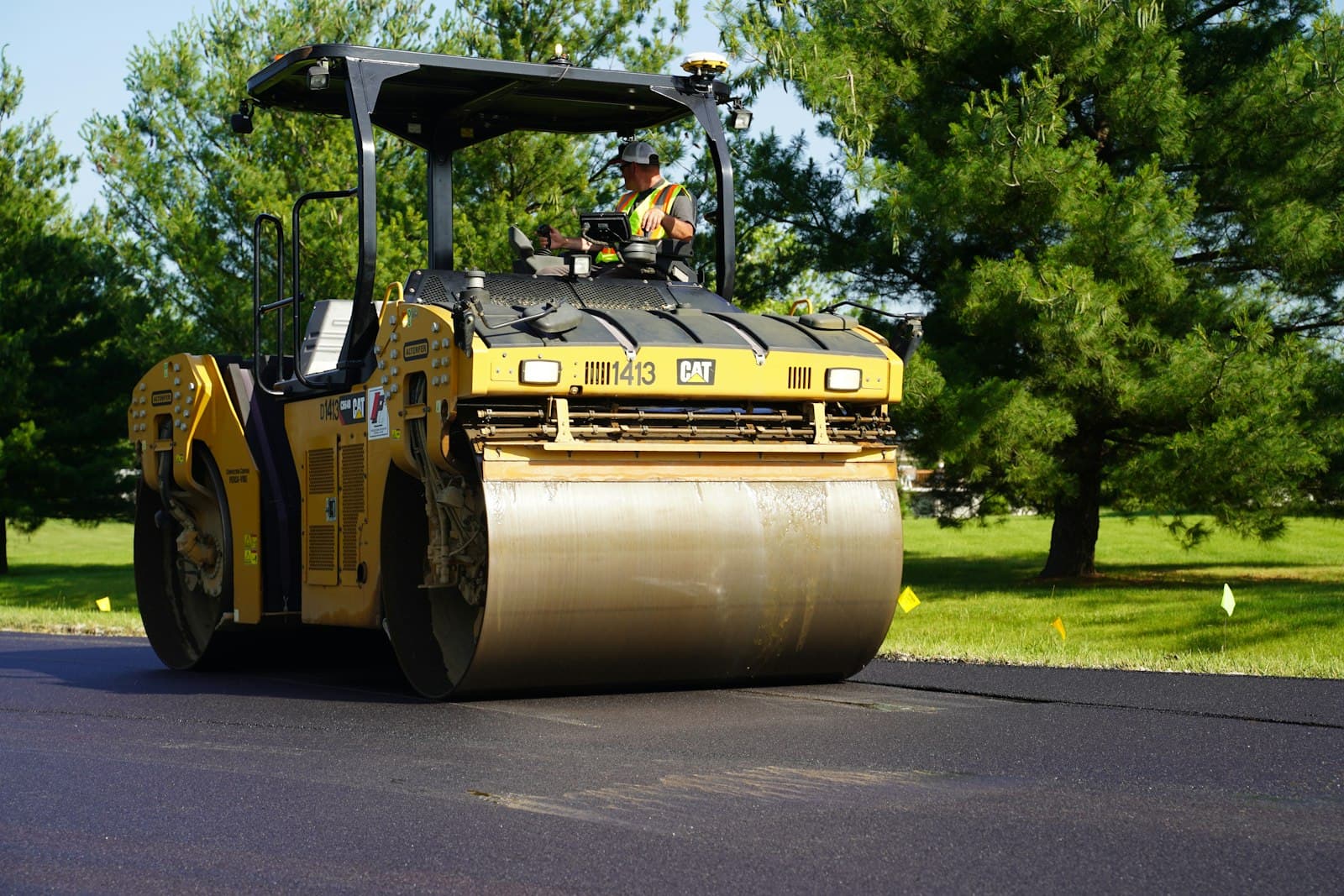
Commercial asphalt paving means building or rebuilding the pavement structure: preparing the subgrade, placing and compacting aggregate base where it is needed, and installing hot-mix asphalt in one or more lifts. Unlike a surface treatment, paving replaces the structural layers a lot depends on.
It covers new construction, full replacement of failed pavement, and expansions or reconfigurations of an existing asphalt parking lot. Where the existing base is still sound, mill and overlay can cost less than starting over, so we look at that option first.
Paving construction also includes the details that make a lot work day to day: slopes and drainage, transitions to curbs and concrete, utility adjustments, and striping once the asphalt is in.
When you need it
When your parking lot needs paving
Paving is the largest pavement investment, so it should be a deliberate decision. These are the signs that it is the right one.
- 01
The base has failed
Alligator cracking, soft spots and pumping across large areas mean the layers under the surface are no longer carrying load. Patching those areas tends to fail again.
- 02
Repairs keep coming back
If the same areas are patched every year, the running cost of repair starts to approach the cost of replacement.
- 03
Water does not drain
Standing water after rain points to grade problems that sealing and striping cannot fix. New paving is the moment to correct slopes.
- 04
The site is changing
New buildings, expanded parking, added truck or delivery traffic, or a change of use can all require pavement designed for a different load.
- 05
Safety and liability
Trip hazards, deep potholes and failed accessible routes are a risk for owners and HOAs, not only an appearance problem.
Process
Our asphalt paving process
- 01
Evaluate and scope
We review existing conditions, access, drainage and the traffic the pavement carries, then define whether the job is new construction, full replacement or a partial rebuild.
- 02
Prepare subgrade and base
Failed material is removed as needed, the subgrade is prepared, and base material is placed and compacted to the specified thickness.
- 03
Place and compact asphalt
Hot-mix asphalt is placed to the specified thickness and compacted. Joints, edges and transitions are finished to drain properly.
- 04
Stripe and hand over
Once the asphalt is ready, the lot is striped, including accessible stalls and fire lanes, and cleaned up for traffic.
Phoenix factors
Paving in Phoenix heat, sun and monsoon
Heat and heavy loads
High pavement temperatures soften asphalt. Thickness and mix should account for slow, heavy loads such as trash trucks and delivery trucks in turning areas and at dumpsters.
UV from day one
Sun starts oxidizing new asphalt immediately, so a maintenance plan of sealing, crack sealing and striping protects the investment from the start.
Monsoon drainage
During storms, grades and drainage paths do most of the work. Water that ponds on or beside the pavement is what weakens it, so we treat grade as part of the design, not an afterthought.
Scheduling around operations
Placement and compaction depend on temperature and on keeping your tenants' access open. Phased work and after-hours scheduling are planning options we discuss in the estimate.
ADA built in
New paving is the cheapest time to get accessible stalls, aisles, slopes and routes right. We plan for them before the first load of asphalt arrives.
Cost
What affects asphalt paving cost
Price is driven by scope, not just square footage. These are the factors that move the number most.
- Area and phasing
- Total square footage, and whether the lot must be built in phases to keep tenants open.
- Thickness and base
- How much asphalt and base material the loads on each part of the lot require.
- Existing condition
- Removal, haul-off and subgrade repair for the pavement that is already there.
- Drainage and grade changes
- Correcting slopes, adding curb or gutter work, and tying into existing structures.
- Access and schedule
- After-hours work, tight sites, and the number of mobilizations.
- Material markets
- Asphalt and aggregate prices move with oil and construction demand, which is why estimates carry a validity window.
- Striping and ADA upgrades
- Final layout, accessible stalls, signage supports and fire lane markings.
FAQ
Asphalt Paving FAQs
How long does new commercial asphalt last in Phoenix?
It depends on design, traffic, drainage and maintenance. Pavement that is sealed, crack-sealed and repaired on a schedule lasts noticeably longer than pavement that is ignored. We will give you a realistic expectation for your lot rather than a generic number.
Do I need to replace my parking lot, or can it be resurfaced?
If the base is still sound, mill and overlay can restore the surface for less than full replacement. If the base has failed across large areas, resurfacing will not last. A site review tells us which applies.
How long will my lot be closed during paving?
It depends on size and phasing. Large lots are usually done in sections so tenants keep access. Your estimate lays out the sequence and the expected closures for each phase.
How thick should commercial asphalt be?
It depends on the subgrade and the traffic. Car-only stalls need less than truck lanes and loading areas. We recommend thickness by area of the lot, not one number for the whole site.
Can new asphalt be striped right away?
Striping is done once the asphalt has cooled and set enough to take paint. We sequence it as part of the job so the lot reopens complete.
Is asphalt or concrete better for a commercial parking lot?
Asphalt is the common choice for parking lots because of its cost, speed of installation and ease of repair. Concrete suits some heavy-load or specialty areas. Our focus is asphalt.
Can you maintain the pavement after it is built?
Yes. Sealcoating, crack sealing, repair and striping are all part of what we do, so we can plan the maintenance schedule when we pave.
Planning a paving project?
Tell us about your property and the work you have in mind. You will get a clear scope and a detailed proposal.
Serving the Phoenix metro
Phoenix, Scottsdale, Mesa, Tempe, Chandler, Gilbert, Glendale, Peoria, Surprise, Goodyear, Queen Creek, Tolleson
See the full service area